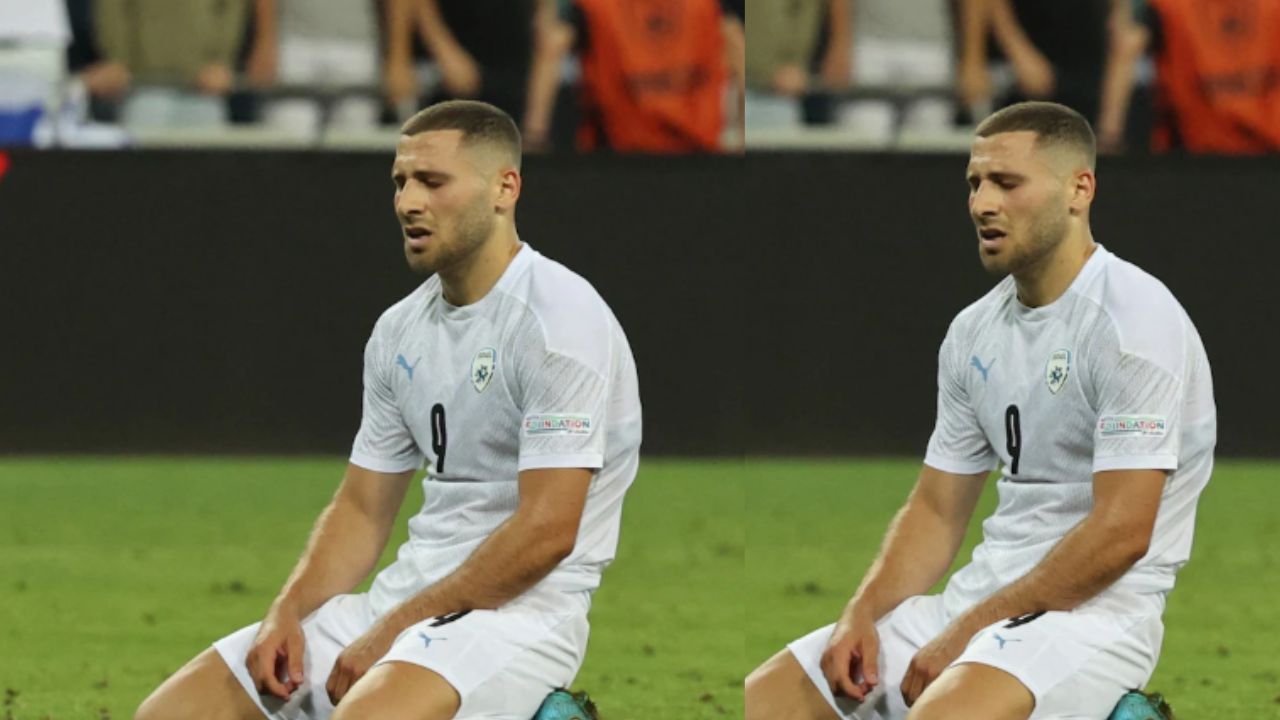
In a stunning reversal, German football club Fortuna Düsseldorf has officially withdrawn from signing Israeli forward Shon Weissman following the surfacing of his controversial social media activity related to the ongoing conflict in Gaza.
The Bundesliga 2 club had reportedly been in advanced negotiations to bring the 28-year-old striker on board from Spanish club Granada CF. However, Fortuna Düsseldorf released a statement confirming they have terminated all discussions in response to public backlash surrounding Weissman’s past social media posts, which critics labeled as anti-Gaza or politically insensitive.
The Fallout: From Transfer Talks to Total Pullback
Shon Weissman, a prominent name in Israeli football and former top scorer in the Austrian Bundesliga, was being eyed to bolster Düsseldorf’s attack. Yet, as news of his possible arrival broke, so did screenshots of several posts he had made on social media platforms during the Israel-Gaza conflict.
According to reports, some of these posts appeared to endorse Israeli military actions in Gaza, drawing widespread criticism from fans and human rights groups, particularly in Germany, where political and social sensitivity around Middle East conflicts remains extremely high.
Faced with rising pressure from sections of its fan base, political activists, and local community organizations, the club issued a statement saying:
“Fortuna Düsseldorf is a club rooted in values of inclusion, peace, and respect. In light of recent findings regarding the online activities of Shon Weissman, we have decided not to pursue the transfer any further. We want our club to be a place where everyone feels safe and represented.”
Fan Reaction: Divided But Vocal
Reactions among supporters have been deeply polarized. While some fans applauded the club for making a principled decision, others criticized it for mixing politics with sport. Social media debates raged over whether athletes should be judged for political views, especially if expressed outside the professional domain.
One Düsseldorf supporter posted on X (formerly Twitter):
“Weissman’s posts were insensitive at best. Glad to see my club take a stand for humanitarian values.”
Another wrote:
“This sets a dangerous precedent. Are we now going to start canceling players based on personal beliefs?”
Player’s Camp Responds
While Weissman himself has yet to issue a personal statement, sources close to the player have described the decision as “disappointing” and claim his posts were taken out of context. They maintain that his intention was to show solidarity with his country, not to promote hate or violence.
A representative stated:
“Shon respects all lives and never meant to offend or divide. He believes in peace and the right to self-defense. It’s unfortunate that he is being judged for standing with his people in a time of war.”
Broader Context: Sports, Politics, and Global Conflicts
This incident adds to a growing list of high-profile controversies where sports and geopolitics collide. From athletes being barred over positions on Russia-Ukraine to backlash over players’ stance on Palestine, global conflicts have increasingly seeped into the world of professional sports.
Germany, with its unique historical responsibilities and large immigrant population, often finds itself at the center of such debates, especially when it involves Israeli or Palestinian matters.
What’s Next For Weissman?
With Fortuna Düsseldorf out of the picture, Weissman’s future remains unclear. While his footballing credentials are not in doubt—he has scored consistently across European leagues—his off-field image may now be a hurdle for clubs wary of political or PR fallout.
Some reports suggest Israeli clubs or other European teams less sensitive to the political issue may still be interested in signing him before the transfer window closes.
The Shon Weissman transfer saga is a stark reminder of the blurring lines between personal expression and professional opportunity. While clubs have every right to vet players for cultural fit, fans and critics alike will continue to debate whether such decisions uphold values or silence voices.